
LONGEVITY WATCH — Issue #2 — November 20, 2026
NOT MEDICAL ADVICE. Research intelligence for editorial and advisory use only; discuss any drug, supplement, device or test with a clinician. Michael Calmeyer Hentschel is the final editor.
Digest Sections:
2. SCIENCE UPDATES AND REGULATIONS
3. ADVISORY BOARD – SEVEN SAGES
6. SOCIAL, ENVIRONMENTAL AND ECONOMIC LONGEVITY
7. DEMAND, SUPPLY AND MONETIZATION
1. TOP ALERTS
- ★ Later-born generations reach old age with better memory (Nature Medicine, Nov 17). In 219,000 adults aged 50+ born 1910–1964, each ten-year later birth was linked to a 10% higher memory score at 60 and slower decline. Nature news
- ★ Aging clocks do not move for every longevity drug. A Frontiers in Genetics review of 41 human studies, summarized Nov 14–17, found exercise, plant-rich diet, caloric restriction and semaglutide lowered next-generation clocks, while rapamycin, senolytics and nicotinamide riboside showed no detectable effect in small trials. Frontiers in Genetics · AgeAmaze
- ★ AI companions and loneliness (Durham University, Nov 19). Five studies with 1,447 UK and US participants tie lower loneliness to companions that users experience as attentive and non-judgemental; the authors urge safeguards and say companions should complement people. Durham University
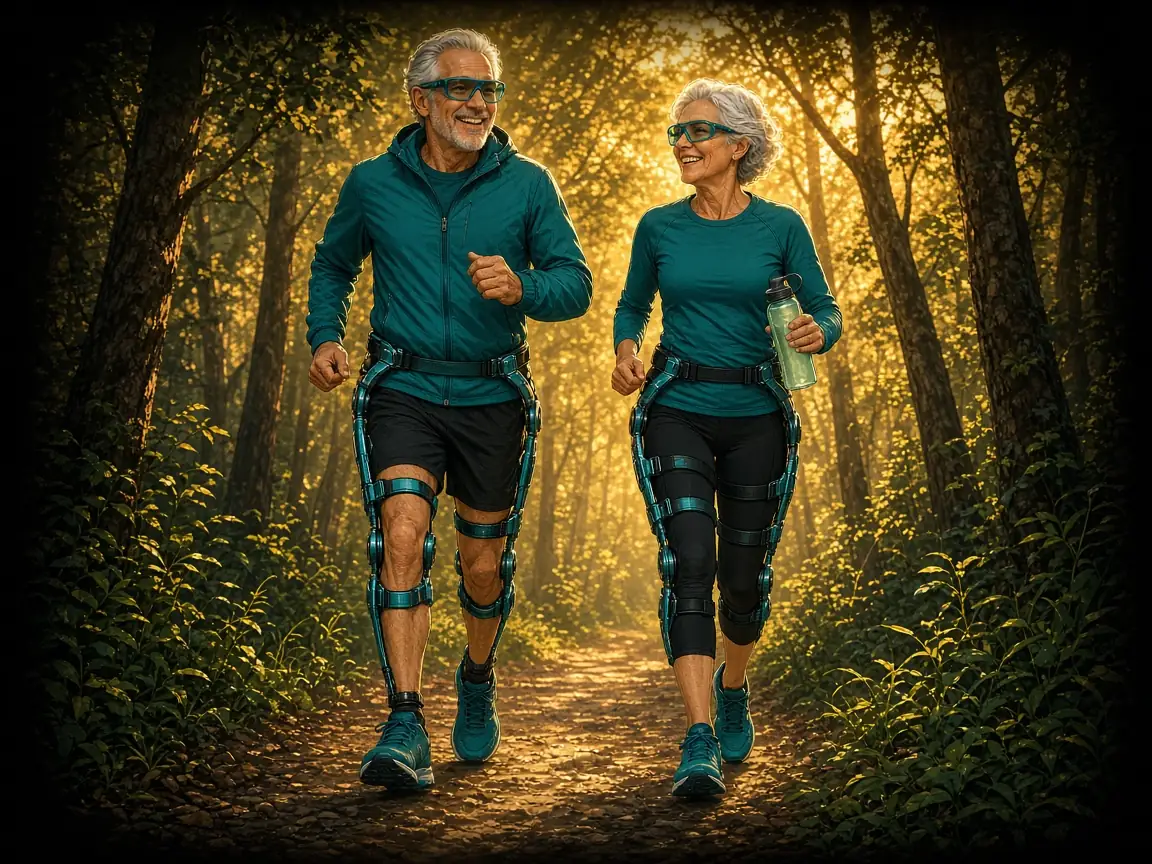
- ★ A soft exosuit helps 69–85-year-olds stand up (TUM, Nov 19). Ten older adults gained about two sit-to-stand cycles per minute and walked with 14% lower metabolic cost on average; a separate 12-week passive hip-exoskeleton study kept only 7 of 16 participants. Robohub (TUM) · Scienmag
- ★ Lighter display glasses keep coming (Nov 18). Vuzix unveiled a sub-40-gram full-colour reference design for eyewear brands, and RayNeo added heads-up walking navigation and a December open SDK to its 33 g camera-free iO glasses. Vuzix release · Spatial Field Notes
- ★ Longevity care money: Hone Health raises $228M (Nov 18). The round combines $28M of Series A equity with $200M of growth financing from General Catalyst’s Customer Value Fund. Hone Health release · Fierce Healthcare
- ★ Morning and frequent naps flag higher mortality risk (Nov 16). In 1,338 older adults followed up to 19 years, each extra hour of daytime sleep was associated with 13% higher mortality. ScienceDaily
2. SCIENCE UPDATES AND REGULATION
Each item: grade, hype-vs-evidence tag, lens and desk, a short evidence summary, who it matters to, and its links. Window: November 13–20, 2026; items reported in the November 13 test issue are not repeated.
Grades: A = replicated human RCTs or meta-analysis · B = solid human observational data, credible review or hard regulatory fact · C = small or industry-funded human trial, or strong animal data · D = mechanistic, anecdotal or marketing claim.
Lens tags: N = need (demand) · T = tool (supply) · O = opportunity (monetization). 'Init.' numbers refer to the Longevity Strategies List v1.1 of November 13, 2026. ★ marks a top alert.
NOT MEDICAL ADVICE. Research intelligence for editorial and advisory use only; discuss any drug, supplement, device or test with a clinician. Michael Calmeyer Hentschel is the final editor.
2.1 People entering old age now have better memory than their parents did (Nature Medicine, Nov 17; Nature news, Nov 19, 2026)
Grade: B (very large observational cohorts) Hype vs. evidence: Evidence; cause not established Lens: N · 03 MIND · Init. 16
The study tracked word-list recall in 219,000 people aged 50+ born between 1910 and 1964 over three decades. A ten-year later birth date was associated with a 10% higher memory score at age 60, and each successive birth decade was 64% more likely to keep stable memory. In brain imaging of nearly 2,000 people, stable memory went with less hippocampal shrinkage. Nature notes that dementia rates have fallen 13% per decade over 27 years in Europe and the US, citing earlier work.
Matters to: Multidomain Brain Health Program (Init. 16): an encouraging, non-fatalistic message for clients; Longevity Dashboard & Function Tests (Init. 10).
Links: Nature news
2.2 Review of 41 human studies: which interventions move next-generation epigenetic clocks (Frontiers in Genetics; summaries Nov 14 and Nov 17, 2026)
Grade: B (systematic review) / C for each null drug result (small trials) Hype vs. evidence: Evidence tempers clock marketing Lens: T · 07 MEASURE · Init. 10, 24
The Johnson and Sinclair review found that exercise, a plant-rich diet, semaglutide, caloric restriction, ketamine, omega-3s, a multivitamin-multimineral, umbilical cord plasma and pitavastatin lowered at least one next-generation clock (GrimAge, PhenoAge, DunedinPACE). Nicotinamide riboside, rapamycin and senolytics showed no detectable effect, and plasmapheresis accelerated clock age. AgeAmaze stresses that a null clock result covers only the clocks measured, and that the semaglutide signal rests on one or two trials not designed for clock outcomes.
Matters to: Longevity Dashboard & Function Tests (Init. 10: keep clocks labelled research-grade); Supplement & Remedy Evidence Monitor (Init. 24: NR remains overhyped); Advisory Board (Kaeberlein, Barzilai).
Links: Frontiers in Genetics · AgeAmaze
2.3 Centenarians’ gut microbes modify bile acids; boosting that activity helped aged mice (Cell Metabolism, Nov 16, 2026)
Grade: C (human association plus mouse experiment) Hype vs. evidence: Promising mechanism; human benefit unproven Lens: T · 06 MEDICAL · Init. 18
UC San Diego researchers reanalysed bile-acid data from 48 young adults, 107 older adults and 125 centenarians; centenarians had higher ratios of certain microbe-modified bile acids. Engineered gut bacteria producing bile salt hydrolase, given once to 82-week-old mice, improved insulin sensitivity at about 20 weeks and shifted body composition by 32 weeks. The authors say the work does not show the microbes caused longevity or that the bacteria extend lifespan.
Matters to: Mediterranean Table (Init. 18) as a watch-list item; Product Manager (screen any ‘centenarian microbiome’ probiotic claims).
Links: Medical Xpress (UC San Diego)
2.4 Longer, more frequent and morning naps linked to higher mortality in older adults (JAMA Network Open; ScienceDaily, Nov 16, 2026)
Grade: B (prospective cohort with measured sleep) Hype vs. evidence: Easy to misread as ‘naps kill’ Lens: N · 02 BODY · Init. 15
Mass General Brigham and Rush researchers followed 1,338 older adults for up to 19 years. Each additional hour of daytime sleep was associated with 13% higher mortality risk, and morning nappers had 30% higher risk than afternoon nappers. The authors frame napping patterns as possible early warning signs of declining health, not a cause.
Matters to: Sleep Rhythm Coach (Init. 15): treat new or growing daytime sleep as a cue to check in with a clinician; Longevity Dashboard (Init. 10).
Links: ScienceDaily
2.5 GLP-1 drugs and the brain: Science review weighs mixed evidence after negative Alzheimer’s trials (Medical Daily, Nov 18, 2026)
Grade: A for the negative Alzheimer’s trials / C for cognitive-protection claims Hype vs. evidence: Hype risk on ‘GLP-1 protects the brain’ Lens: N/T · 03 MIND, 06 MEDICAL · Init. 16
A review in Science by Gothenburg and Copenhagen scientists argues that semaglutide and tirzepatide may still help thinking skills in some patients. It reports no new experiments: animal data suggest effects on learning and memory, human data are inconsistent, and Novo Nordisk’s EVOKE and EVOKE+ trials in 3,808 adults with early Alzheimer’s found that oral semaglutide did not slow decline, though it shifted some biomarkers.
Matters to: Multidomain Brain Health Program (Init. 16): keep GLP-1 out of any brain-protection claim; Client communications on GLP-1.
Links: Medical Daily
2.6 Adult-only reduction of insulin signalling cut germline mutations in worms (Aging Cell, Nov 17, 2026)
Grade: D (C. elegans) Hype vs. evidence: Basic science; no human claim Lens: T · 06 MEDICAL · Init. 24
Adult-onset daf-2 RNAi, a lifespan-extending reduction of insulin/IGF-1 signalling, lowered germline single-nucleotide mutation rates by up to about 50% in wild-type worms without detectable fertility costs. The protective effect required the Argonaute protein HRDE-1; in mutants lacking it, mutations rose under UV exposure.
Matters to: Longevity Expert (background on nutrient-sensing pathways); no product implication.
Links: Aging Cell (PMC)
2.7 FDA: no dietary-supplement warning letters among those listed for the November 17 posting (FDA warning-letter list, Nov 17, 2026)
Grade: B (regulatory record) Hype vs. evidence: Quality watch Lens: T · 11 RULES & RISK · Init. 24
The letters FDA’s warning-letter page lists for its November 17 posting cover vape sellers, drug manufacturing sites and food firms, including an over-the-counter drug CGMP letter to Natural Essentials, Inc.; none of those listed carries the dietary-supplement subject. FDA’s novel-drug list shows approvals on November 13–18 in rare disease, oncology and myasthenia gravis, with none for aging, obesity or Alzheimer’s disease.
Matters to: Supplement & Remedy Evidence Monitor (Init. 24); TVV Shop Manager (supplier vetting continues).
Links: FDA warning letters · FDA novel drug approvals 2026
3. ADVISORY BOARD - SEVEN SAGES UPDATES
● Peter Attia: The Drive #416 (November 16) welcomes back mitochondrial biologist Navdeep Chandel on what mitochondria do beyond ATP, what ‘mitochondrial dysfunction’ means, metformin’s mechanisms, and the evidence for supplements and therapies aimed at mitochondria. Attia #416
● Eric Topol: Ground Truths posted a conversation with Joanna Chikwe, Chair of Cardiac Surgery at Cedars-Sinai’s Smidt Heart Institute, on leadership, diversity and cardiac surgery (November 15). Not aging-specific. Ground Truths episode · Ground Truths archive
● Tony Wyss-Coray: None found this week.
● Valter Longo: None found this week. His most recent item found is a Healio Q&A on combining two diets, dated November 12, just before the window. Healio
● Nir Barzilai: Gives the Rutgers Nutritional Sciences seminar ‘How to Die Young at a Very Old Age’ today, November 20 (10:15 a.m. ET, online and in person), drawing on research in more than 800 centenarian families, gerotherapeutics and biological-age measurement. Rutgers event page
● Matt Kaeberlein: None found this week.
● Andrea Maier: No new paper found. The Global Wellness Summit in Phuket (November 10–13, overlapping the window by one day) billed her to present ‘Health Optimization: Integrating Consumer-Led Health and Precision Geromedicine’; no report of the talk was found. Global Wellness Summit release
4. BEHAVIORAL TOOLS — COMPANIONS, STORIES, GAMIFICATION
4.1 ‘Synthetic mindfulness’: when AI companions ease loneliness (Durham University, Nov 19, 2026)
Grade: C (five survey and experimental studies, n=1,447) Hype vs. evidence: Promising; not seniors-specific Lens: T · 04 BEHAVIOR TOOLS, 01 ISOLATION · Init. 3, 6
Led by Varqa Shamsi Bahar with Cardiff and Manchester colleagues and published in Psychology & Marketing, the work finds benefits depend on whether users see a companion as attentive, non-judgemental and responsive. Belonging and self-esteem were the two routes to lower loneliness. The authors warn that deep attachments can lead some users to favour AI over people and recommend wellbeing-centred design.
Matters to: Companion & Story Longevity (Init. 6) and the Design Standard + AI-Companion Safety Charter (Init. 3): build the ‘nudge-to-people’ rule into every companion; Psychology Health Expert.
Links: Durham University
4.2 WHOOP launches ‘Humans’, an opt-in social network for sharing health metrics (TechRepublic, Nov 16, 2026)
Grade: D (product launch) Hype vs. evidence: Engagement feature; no outcome data Lens: T/O · 04 BEHAVIOR TOOLS · Init. 2, 7
WHOOP’s free Humans network lets users choose which health and fitness data to share with others. Social sharing is a classic gamification lever; the coverage also raises the privacy questions that come with sharing body data.
Matters to: Gaming Guru (Longevity Game series, Init. 2: team and buddy mechanics); Connection Circle (Init. 7); Trusted-Person Access & Consent Controls (Init. 14).
Links: TechRepublic
4.3 Apple tests conversational health AI in a U.S. research study (Wareable, Nov 17, 2026)
Grade: D (study launch; no results) Hype vs. evidence: Watch item Lens: T · 04 BEHAVIOR TOOLS, 07 MEASURE · Init. 6, 10
The ‘Apple Health AI Usage Study’, built with clinical AI platform OpenEvidence, lets participants ask everyday health questions and get plain-language answers with citations, optionally drawing on HealthKit data such as resting heart rate, activity, sleep and lab results. It aims to study trust, comprehension and everyday health actions.
Matters to: Companion & Story Longevity (Init. 6): benchmark for cited, plain-language health conversation; Longevity Dashboard (Init. 10).
Links: Wareable
5. PHYSICAL TOOLS — EXOSKELETONS, LIGHT SMART GLASSES, WEARABLES
5.1 TUM soft exosuit with artificial tendons helps older adults stand and walk (Robohub / Technical University of Munich, Nov 19, 2026)
Grade: C (small device study, n=10) Hype vs. evidence: Evidence, early Lens: T · 05 PHYSICAL TOOLS · Init. 19, 1
The suit uses thigh straps, a waist belt and motor-driven artificial tendons, with machine learning timing hip assistance. Ten adults aged 69–85 with reduced lower-limb function completed on average 18 sit-to-stand cycles per minute, two more than before, with cycle time cut by up to 21.9%. Walking metabolic cost fell 14% on average (up to 27.5%).
Matters to: Physical Products Guru (Assist-Wear, Init. 19: track for the shortlist); Fall-Proof Home & Move Well Core (Init. 1).
Links: Robohub (TUM)
5.2 Passive hip exoskeleton at home for 12 weeks: only partly feasible in pre-frail adults (Pilot and Feasibility Studies; Scienmag, Nov 18, 2026)
Grade: C (single-arm feasibility, n=16) Hype vs. evidence: Reality check on adherence Lens: T · 05 PHYSICAL TOOLS · Init. 19, 11
Sixteen adults over 65 were asked to wear a bilateral passive exoskeleton 30 minutes a day for 12 weeks. Only seven completed the protocol and week-18 follow-up; five of those seven met the adherence target. Completers rated wearability and acceptability as acceptable.
Matters to: Assist-Wear (Init. 19) and Tech Buddy Onboarding (Init. 11): adherence support matters as much as hardware.
Links: Scienmag · Pilot and Feasibility Studies
5.3 Vuzix Ultralite Color: sub-40-gram full-colour AI eyewear reference design (Vuzix release, Nov 18, 2026)
Grade: D (vendor claims) Hype vs. evidence: Product news Lens: T · 08 TECHSHOP · Init. 2, 4
An OEM platform with binocular waveguide displays for eyewear brands that want to build their own full-colour AI glasses; named a CES 2027 Innovation Awards Honoree in Fashion Tech.
Matters to: TVV Shop Manager and Gaming Guru (glasses line for the Longevity Game, Init. 2); Hear & See Well (Init. 4: caption displays).
Links: Vuzix release
5.4 RayNeo iO adds heads-up navigation; open SDK due in December (Spatial Field Notes, Nov 19, 2026)
Grade: D (vendor announcement) Hype vs. evidence: Product news Lens: T · 08 TECHSHOP · Init. 2
RayNeo announced turn-by-turn walking and cycling directions on its 33 g camera-free iO glasses and a December 2026 public SDK so users can build apps without coding. Its Japan store lists the iO from 75,650 yen with free prescription lenses during a November 19–December 7 campaign.
Matters to: Gaming Guru (a camera-free platform with an open SDK suits a glasses season of the Longevity Game, Init. 2); TVV Shop Manager.
Links: Spatial Field Notes
5.5 Oura adds Jet Lag plans; Wahoo uses Oura data for ‘My Readiness’ (Android Authority and endurance.biz, Nov 17, 2026)
Grade: D (feature launches) Hype vs. evidence: Product news Lens: T · 07 MEASURE · Init. 15, 10
Oura’s Jet Lag feature uses sleep history and chronotype to time light, sleep and caffeine across time zones (Gen 3 and newer rings). Wahoo’s My Readiness combines Oura heart-rate variability, resting heart rate and sleep with training history to guide when to train hard or recover.
Matters to: Sleep Rhythm Coach (Init. 15); Longevity Dashboard & Function Tests (Init. 10).
Links: Android Authority · endurance.biz
Physical-tools snapshot (as reported by the linked sources):
Product | What is new | Weight / form | Price / status | Date | Source |
|---|---|---|---|---|---|
TUM soft exosuit | Hip assistance for sit-to-stand and walking; ML-timed tendons | Straps, belt, back-worn motor | Research prototype | Nov 19 | |
Passive hip exoskeleton (study) | 12-week home use, 30 min/day | Bilateral, passive | 7 of 16 completed | Nov 18 | |
Vuzix Ultralite Color | Full-colour binocular waveguide OEM design | Under 40 g | Reference platform for brands | Nov 18 | |
RayNeo iO | Heads-up navigation; open SDK in December | 33 g, no camera | Japan from 75,650 yen | Nov 18–19 | |
Oura Ring (Gen 3+) | Jet Lag plans; data feeds Wahoo My Readiness | Ring | Rolling out globally | Nov 17 | |
WHOOP | Humans opt-in social network | Strap | Free network | Nov 16 |
6. SOCIAL, ENVIRONMENTAL AND ECONOMIC LONGEVITY
6.1 Loneliness and isolation linked to higher death rates in type 2 diabetes (Perspectives in Public Health, Nov 19, 2026)
Grade: B (cohort, n=7,712, 5.9 years) Hype vs. evidence: Evidence (observational) Lens: N · 01 ISOLATION · Init. 7, 6
Among adults with type 2 diabetes, all-cause death rates were higher with loneliness (hazard ratio 1.32) and with social isolation (1.35). Baseline health problems could drive both disconnection and later deaths.
Matters to: Connection Circle (Init. 7); Companion & Story Longevity (Init. 6); Sales Advisor (B2B evidence for chronic-disease payers).
Links: AgingResearch.News
6.2 Regret stories change retirement choices of people who underestimate their lifespan (Wharton Pension Research Council WP2026-14, November 2026)
Grade: C (survey experiment) Hype vs. evidence: Evidence; behavioural finance Lens: N/O · 10 MONEY · Init. 5
Hurwitz and Mitchell find that among people who underestimated their survival odds, learning about others’ regret over not buying annuities raised annuitization recommendations by 16.9 percentage points, while regret over under-saving reduced recommendations to save much more by 15.4 points.
Matters to: Financial Longevity & Fraud Shield (Init. 5): show realistic lifespan odds before money decisions; Capitalist CFO.
Links: Wharton PRC working paper
6.3 Families underestimate the cost of supporting adult children in retirement (Center for Retirement Research brief 26-23, November 2026)
Grade: B (national survey, ages 45–80) Hype vs. evidence: Evidence Lens: N · 10 MONEY · Init. 5, 8
Using a March 2026 survey built with Jackson National Life and Greenwald Research, the brief finds family risks such as widowhood, divorce and aid to relatives remain common and costly. Households’ expectations for divorce, widowhood and aid to parents were reasonable, but they substantially underestimated support for adult children.
Matters to: Financial Longevity & Fraud Shield (Init. 5); Caregiver Support Hub (Init. 8).
Links: CRR brief
● Environmental desk: No new environmental-exposure longevity study with a confirmed date in the November 13–20 window was found.
7. DEMAND, SUPPLY AND MONETIZATION
Demand (N), supply (T) and monetization (O) signals dated in the window. Figures are as stated by the linked company or outlet; none are audited by TVV.
Date | Company / program | Signal | Lens | Source |
|---|---|---|---|---|
Nov 18 | Hone Health | $228M: $28M Series A equity plus $200M growth financing from General Catalyst’s Customer Value Fund; round led by MarcyPen Capital Partners; to expand physician-led longevity care for men and women. | O | |
Nov 17 | Biomolecular Life Holdings (OTC: BIOM) | Preparing to acquire Dr Dacon Medicina Biológica, Dr. David Contreras’s Bogotá practice, including its clinic real estate, to add a biomolecular-therapy clinical arm. | O | |
Nov 17 | Apple / OpenEvidence | U.S. research app testing conversational health AI with optional Apple Watch and HealthKit data. | T | |
Nov 17 | Oura; Wahoo | Jet Lag plans; Oura data inside Wahoo’s My Readiness, a partner-integration channel for ring data. | T/O | |
Nov 18 | Vuzix; RayNeo | OEM reference design for brands; camera-free glasses with an open SDK, lowering the cost of building glasses apps. | T | |
Nov 16 | OmegaQuant co-authored DHA study | UK Biobank analysis linking higher blood DHA to 18% lower frailty risk; the co-author founded an omega-3 testing company. | N/O | |
Nov 19 | Durham University | AI companions linked to lower loneliness; authors call for wellbeing-centred design. | N |
● Physician-led longevity care scales up (O): Hone’s round mixes equity with $200M of customer-value financing, a structure that funds customer acquisition for subscription care. Hone Health release
● Clinics as acquisition targets (O): BIOM’s planned purchase adds a clinic and its real estate to a supplement-and-wellness holding company; the release describes it as a planned acquisition, not a completed one. BIOM release
● Glasses platforms open up (T): An OEM reference design and an open SDK both lower the cost of a glasses-based Longevity Game prototype. Vuzix release · Spatial Field Notes
8. TVV INITIATIVES TRACKER — MAPPED TO LONGEVITY STRATEGIES LIST
Status reflects only this week's public signals; the 'next step' column quotes the Strategies List v1.1. Priority initiatives first: smart-glasses Longevity Game, companion longevity and exoskeletons.
Init. | Initiative | This week’s signals (items) | Lens | List’s next step |
|---|---|---|---|---|
2 | Longevity Game series (smart-glasses Longevity Game; Season 1 Strength & Steps Quest) | Vuzix sub-40 g colour design and RayNeo iO open SDK (5.3, 5.4); WHOOP Humans social sharing (4.2). Vuzix release · Spatial Field Notes | T | GATE: must pass #3 first. Season 1 spec as a 4-week challenge; paper or simulator prototype now; keep glasses a separate TechShop line. |
6 | Companion & Story Longevity | Durham ‘synthetic mindfulness’ studies (4.1); Apple conversational health AI study (4.3). Durham University | T/N | GATE: must pass #3. Companion design charter (memory, consent, nudge-to-people rule); 10-prompt story pack; 2-minute check-in script. |
19 | Assist-Wear (recreation and wellness exoskeletons) | TUM soft exosuit (5.1); passive hip-exoskeleton adherence problems (5.2). Robohub (TUM) · Scienmag | T | HOLD for launch until #3 is done; seated, supervised use. Product shortlist; wellness-vs-medical sorting. |
3 | Trauma- & Neglect-Sensitive Design Standard + AI-Companion Safety Charter | Durham authors warn of over-attachment to AI companions (4.1). Durham University | N | One-page standard; first charter deliverable is a checklist inside #6. |
5 | Financial Longevity & Fraud Shield | Wharton regret experiment (6.2); CRR family-risk brief (6.3). Wharton PRC · CRR brief | N/O | Draft a checklist and the code-word kit; education, not financial advice. |
7 | Connection Circle | Loneliness and isolation linked to higher mortality in type 2 diabetes (6.1). AgingResearch.News | N | Define the connection-minute metric; pick one pilot community. |
10 | Longevity Dashboard & Function Tests | Clock review: many interventions do not move clocks (2.2); sit-to-stand gains with exosuit (5.1). Frontiers in Genetics | T | Define a no-regret set of function measures; label clocks research-grade. |
15 | Sleep Rhythm Coach | Napping and mortality (2.4); Oura Jet Lag (5.5). ScienceDaily · Android Authority | N/T | Scan existing digital CBT-I products; draft a coaching flow for clinician review. |
16 | Multidomain Brain Health Program | Generational memory gains (2.1); GLP-1 brain claims remain unproven (2.5). Nature news · Medical Daily | N | Adapt the protocol outline in wellness framing with reviewers. |
24 | Supplement & Remedy Evidence Monitor | DHA and frailty (9); NR null on clocks (2.2); no new FDA supplement warning letters (2.7). NutraIngredients | T | Keep the Monday refresh; add category type to new tabs; align grading. |
9. LONGEVITY SUPPLEMENTS
Summary of the Longevity Strategies Project’s internal supplements reports dated November 16, 2026 (Longevity Supplements Monitor 2026-11-16 v1.0; Colds and Flu, Hair, Mitochondria and Throat Infections Supplements Monitors 2026-11-16 v1.0), plus this week’s external items. The links below are the monitors’ own public sources or this week’s news.
● NMN: A 42-day open-label four-arm study of NMN-based formulations (Abe 2026, Nutrients; n=40, ages 45–65) found no significant between-group gains in cardiopulmonary or cognitive outcomes; the formulations came from the manufacturer. The monitor keeps grade B and the ‘Overhyped’ label. PubMed: NMN open-label study
● Creatine: A scoping review of creatine in Alzheimer’s disease (Choquet de Isla 2026, Nutrients; 9 preclinical and clinical studies) rests on a single pilot trial from one group. Brain claims stay preliminary; the grade A for muscle and strength is unchanged. PubMed: creatine and Alzheimer’s
● Hair: A split-scalp double-blind RCT (n=21) found no difference between an ‘upgraded’ and conventional platelet-rich plasma, with modest density gains (grade B unchanged). A review of 146 stem-cell and exosome studies rests mostly on small or uncontrolled work (grade C, ‘Overhyped’ unchanged). PubMed: PRP RCT · PubMed: stem-cell/exosome review
● Colds & Flu and Throat Infections: No grade changes after the monitors’ PubMed searches of November 12–16 entries. FDA’s 2024 oral phenylephrine removal is still only a proposed order, so those decongestants remain on sale. FDA: oral phenylephrine
● New this week — DHA and frailty (NutraIngredients, Nov 16): In 38,577 UK Biobank adults followed a median 9.37 years, higher blood DHA was associated with 18% lower risk of developing frailty; total omega-3 and other omega-3s were not. Observational, grade B; a co-author founded an omega-3 testing company. NutraIngredients
● New this week — mitochondria supplements on The Drive: Attia’s #416 with Navdeep Chandel (3) examines the evidence for products aimed at mitochondrial function, a useful cross-check for the Mitochondria Supplements Monitor. Attia #416
10. IDEAS AND OPPORTUNITIES FOR LONGEVITY MOTIVATION
Idea 1 — Suggested: ‘Stand-up streak’ game mechanic. Score sit-to-stand cycles per minute as a weekly Strength & Steps Quest challenge (Init. 2), the measure the TUM exosuit study used, with seated, supervised safety rules. Grounded in: Robohub (TUM)
Idea 2 — Suggested: Open-SDK glasses prototype. Build a small Longevity Game prompt app on a camera-free glasses SDK once it opens in December, kept as a separate TechShop line per the Strategies List (Init. 2). Grounded in: Spatial Field Notes
Idea 3 — Suggested: ‘Attentive, not addictive’ companion checklist. Turn the Durham findings into two charter tests for Companion & Story (Init. 6, gated by Init. 3): does the companion feel attentive and non-judgemental, and does it nudge users toward people. Grounded in: Durham University
Idea 4 — Suggested: Adherence-first Assist-Wear pilot. Because only 7 of 16 finished a 12-week home exoskeleton study, pair any Assist-Wear trial (Init. 19) with Tech Buddy check-ins (Init. 11) and track wear-time as the first metric. Grounded in: Scienmag
Idea 5 — Suggested: ‘Your memory generation’ message. Use the generational memory finding as an optimistic opener in Brain Health materials (Init. 16), worded as ‘associated with’, never as prevention. Grounded in: Nature news
Idea 6 — Suggested: Lifespan-odds card before money decisions. For the Fraud Shield and financial-longevity kit (Init. 5), show realistic survival odds and the common cost of helping adult children before annuity or savings choices. Grounded in: Wharton PRC · CRR brief
Idea 7 — Suggested: Nap-pattern check-in. Add a one-question daytime-sleep check to the Sleep Rhythm Coach (Init. 15): new, longer or morning naps prompt a conversation with a clinician. Grounded in: ScienceDaily
11. FUSION SUMMARY TAKEAWAYS THIS WEEK
Fusion Leader takeaway: This week rewarded function over fashion: later-born generations are keeping their memory longer, while a 41-study review showed that exercise, diet and semaglutide move aging clocks but rapamycin, senolytics and NR have not yet done so in small human trials. Physical tools grew lighter and more practical, from a tendon-driven exosuit that helps people in their 70s and 80s stand up to a sub-40-gram colour display-glasses design and camera-free glasses gaining an open developer kit, yet a home exoskeleton study kept fewer than half its participants. The opportunity for TVV is to pair these tools with companionship and coaching that keep people using them, as the Durham companion work and Hone Health’s $228M raise both point to demand for attentive, person-centred longevity care.
EDITOR — Michael Hentschel
Not medical advice. Michael Calmeyer Hentschel is the final editor.
In coordination with TechVestVentures and Intuality Psychometric Assessments.
12. SOURCES (EVERY LINK IN THIS ISSUE)
[1] Nature news — https://www.nature.com/articles/d41586-026-03783-9
[2] Frontiers in Genetics — https://www.frontiersin.org/journals/genetics/articles/10.3389/fgene.2026.1836446/full
[3] AgeAmaze — https://www.ageamaze.com/post/review-summary-uneven-epigenetic-clock-signals-longevity-drugs
[4] Durham University — https://www.durham.ac.uk/news-events/latest-news/2026/11/ai-companions-could-help-reduce-loneliness/
[5] Robohub (TUM) — https://robohub.org/soft-exosuit-makes-it-easier-to-stand-up/
[6] Scienmag — https://scienmag.com/passive-hip-exoskeleton-shows-partial-feasibility-in-pre-frail-older-adults/
[7] Vuzix release — https://ir.vuzix.com/news-events/press-releases/detail/2189/vuzix-introduces-ultralite-color-oem-platform-for
[8] Spatial Field Notes — https://spatialfieldnotes.com/articles/rayneo-io-navigation-sdk-japan-price-prescription
[9] Hone Health release — https://www.prnewswire.com/news-releases/hone-health-raises-228m-to-expand-physician-led-longevity-care-for-men-and-women-302943964.html
[10] Fierce Healthcare — https://www.fiercehealthcare.com/digital-health/longevity-platform-hone-health-nabs-228m-build-out-offerings
[11] ScienceDaily — https://www.sciencedaily.com/releases/2026/11/261112230505.htm
[12] Medical Xpress (UC San Diego) — https://medicalxpress.com/news/2026-11-gut-microbiome-linked-exceptional-longevity.html
[13] Medical Daily — https://www.medicaldaily.com/glp-1-drugs-cognition-alzheimers-trials-481373
[14] Aging Cell (PMC) — https://pmc.ncbi.nlm.nih.gov/articles/PMC13776170/
[15] FDA warning letters — https://www.fda.gov/inspections-compliance-enforcement-and-criminal-investigations/compliance-actions-and-activities/warning-letters
[16] FDA novel drug approvals 2026 — https://www.fda.gov/drugs/novel-drug-approvals-fda/novel-drug-approvals-2026
[17] Attia #416 — https://peterattiamd.com/navchandel2/
[18] Ground Truths episode — https://ondacast.com/podcast/ground-truths/episode/jo-chikwe-a-renowned-cardiac-surgeon-on-leadership-diversity-702bd847
[19] Ground Truths archive — https://erictopol.substack.com/archive
[20] Healio — https://www.healio.com/news/primary-care/20261112/qa-can-combining-two-diets-help-prolong-life
[21] Rutgers event page — https://sebs.rutgers.edu/event/2026/seminar-how-die-young-very-old-age-nir-barzilai-md
[22] Global Wellness Summit release — https://www.prnewswire.com/news-releases/andrea-maier-md-world-renowned-pioneer-in-healthy-aging-will-lead-discussions-on-the-future-of-longevity-and-healthspan-at-2026-global-wellness-summit-302893644.html
[23] TechRepublic — https://www.techrepublic.com/article/news-whoop-humans-social-network-health-fitness-data/
[24] Wareable — https://www.wareable.com/apple/apple-health-ai-usage-study-announcement-openevidence-united-states
[25] Pilot and Feasibility Studies — https://doi.org/10.1186/s40814-026-01910-x
[26] Android Authority — https://www.androidauthority.com/oura-ring-jet-lag-feature-3735977/
[27] endurance.biz — https://endurance.biz/2026/industry-news/wahoo-and-oura-partner-up-to-launch-my-readiness-recovery-tracking-feature/
[28] AgingResearch.News — https://agingresearch.news/p/DOI-10.1177_17579139261499209/loneliness-isolation-linked-to-higher-death-rates-in-type-2-diabetes
[29] Wharton PRC working paper — https://pensionresearchcouncil.wharton.upenn.edu/wp-content/uploads/2026/11/WP2026-14-HurwitzMitchell.pdf
[30] CRR brief — https://crr.bc.edu/wp-content/uploads/2026/11/IB_26-23-1.pdf
[32] NutraIngredients — https://www.nutraingredients.com/Article/2026/11/16/higher-blood-dha-levels-linked-to-18-lower-risk-of-frailty/
[33] PubMed: NMN open-label study — https://pubmed.ncbi.nlm.nih.gov/43030118/
[34] PubMed: creatine and Alzheimer’s — https://pubmed.ncbi.nlm.nih.gov/43030106/
[35] PubMed: PRP RCT — https://pubmed.ncbi.nlm.nih.gov/43033465/
[36] PubMed: stem-cell/exosome review — https://pubmed.ncbi.nlm.nih.gov/43021418/
[37] FDA: oral phenylephrine — https://www.fda.gov/drugs/understanding-over-counter-medicines/key-information-about-nonprescription-over-counter-otc-oral-phenylephrine
[38] TechVestVentures (Longevity Health Graphs) — https://atlantean2.github.io/tvv-longevity-health-graphs/
[39] Intuality Assessments — https://intualityassessments.com